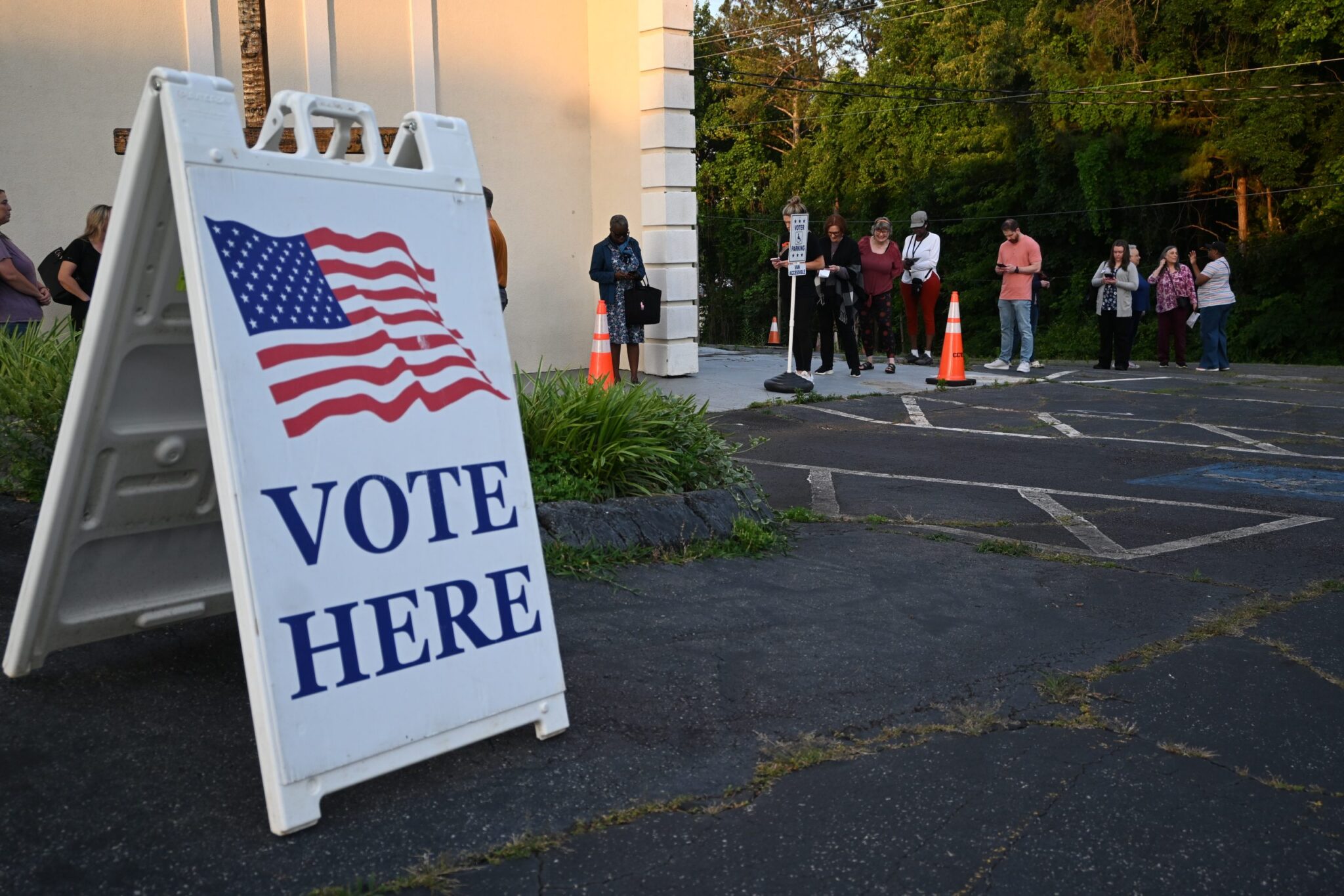
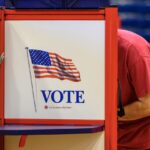

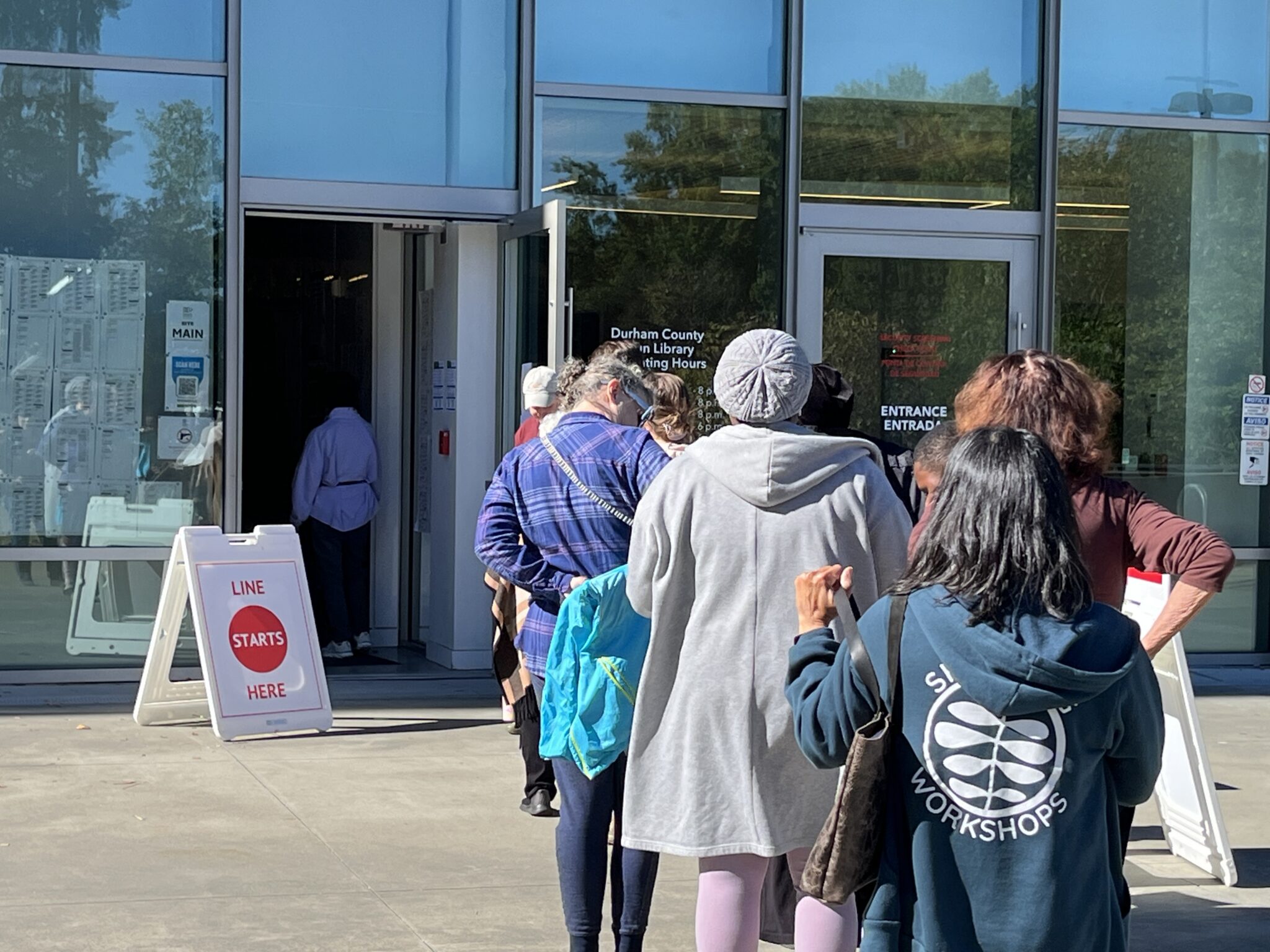
Early voting stats don’t predict Election Day winners, but the first few days of voting in North Carolina have produced a surprise – the eagerness among unaffiliated voters in North Carolina to cast ballots in a midterm election.
Read more City, state employees are proud of their work but face burnout, harassment
In the first five days of early voting, Thursday through Monday, unaffiliated voters cast 34% of ballots. In 2022, unaffiliated voters cast 29% of ballots over the same time.
The number of unaffiliated voters in North Carolina is growing by both raw numbers and share of the electorate. There are about 20% more voters registered as unaffiliated today than there were in 2022, and they now outnumber both registered Democrats and Republicans.
In 2022, voter registration was split about evenly between Democrats, Republicans, and unaffiliated voters, with Republican registration holding a slight edge over Democrats. This year, unaffiliated voters account for 40% of registrants, with Democrats and Republicans each hovering around 30%.
However, turnout among unaffiliated voters in these first few days of early voting has risen even faster than their share of the electorate. In raw numbers, their votes increased 88%, from 133,683 in the first five days of 2022 early voting to 251,891 this year, according to the Center for NC Politics substack run by Catawba College political science professor Michael Bitzer.
In the 2022 midterm elections, unaffiliated voters had cast fewer ballots than Democrats or Republicans at this point in early voting. This year, they are ahead of Republicans.
“Historicaly, unaffiliated voter turnout is 10% below partisans,” David McLennan, a retired political science professor, said in an interview Monday. The increase in early voting thus far is a sign of enthusiasm, he said. “Put that against the backdrop of Democrats up and Republicans down, that makes it interesting.”
Only 40% of independent voters said in an Elon Poll University released Tuesday that they were “very”” or “extremely” excited to vote, compared to 55% of Republicans. However, early voting turnout among unaffiliated voters is stronger. Democrats were the most enthusiastic about voting, according to the Elon University Poll, with 65% saying they were extremely or very excited.
Through Monday, nearly 670,000 people had voted in person.
Democrats have cast nearly 45% of early ballots this year, with their numbers also way ahead of 2022. Unaffiliated voters have cast about 34% of early votes, Republicans have cast nearly 21%, at numbers slightly below 2022.
Bitzer attributed the jump in unaffiliated voters’ early vote turnout to enthusiasm and the fact that some people are registered unaffiliated but are partisan.
“Energy and enthusiasm is on the center-left,” Bitzer said in an interview Monday.
The John Locke Foundation vote tracker and the Carolina Forward Turnout Tracker also follow early voting turnout and absentee ballot returns.
High unaffiliated turnout in toss-up legislative races
It’s become a commonplace observation that independent voters decide statewide races in North Carolina. This may be the year that the impact of unaffiliated voters becomes obvious in toss-up legislative districts as well.
Read more Trump’s DOJ steps up pressure on California over noncitizen voters 2 weeks from election
In House District 37, for example, where incumbent Rep. Erin Pare, R-Wake, is running against Democrat Winn Decker in a district considered a toss-up, unaffiliated voters have cast more ballots than Democrats or Republicans. The same is true in House District 105, where incumbent Rep. Tricia Cotham (R-Mecklenburg) is running against Democrat Ken McCool in what’s expected to be a close race.
Republican turnout spikes on Election Day
It’s not unusual for Democrats to outpace Republicans in early voting, while Republicans more than make up for it on Election Day. It’s the Election Day Republican surge that helps lift many statewide GOP candidates to victory.
That doesn’t always happen, however.
Republican early voting lagged so far behind Democrats’ in 2008 that the GOP’s Election Day push fell short. Then-Democratic presidential candidate Barack Obama, running for his first term, created an early-voting advantage Republicans could not overcome. Obama won the state by 0.5%.
This year’s midterm is far from over.
Vance touts $858M in Helene relief funding for Western North Carolina
Vice President JD Vance campaigned in North Carolina on Monday and President Donald Trump is in North Carolina today as part of the GOP voter turnout effort.
At campaign stops, Trump often tells supporters to pretend he’s on the ballot.
That Trump refrain is a double-edged sword, Bitzer said. He motivates his base, and he also motivates voters who oppose him.
“By the end of this week and into next weekend, things will get firmed up in terms of the pattern,” Bitzer said. “This week will be a critical week if Republicans are going to get out the vote for early voting or take their chances on Election Day.“
Early voting ends Oct. 31.
Elon University Poll shows Cooper maintaining lead in US Senate race
In the Senate race, the Elon University Poll has Democrat Roy Cooper, a former governor, ahead of Republican Michael Whatley, a former Republican National Committee chairman, by 52% to 39% among likely voters.
Cooper led among voters the poll identified as independents who don’t lean Democrat or Republican, 43% to 12%.
“Roy Cooper’s sustained lead over Michael Whatley in North Carolina is being driven in large part by strong support among moderates, true independents and women,” Jason Husser, director of the Elon University Poll, said in a statement. “We also are seeing signs of a potential turnout gap, with Cooper voters expressing higher levels of excitement about voting in the election and placing more importance on the election for real-world outcomes in their lives.”
The race can still tighten, Husser wrote. When pressed, undecided voters give Whatley a slight advantage, and Whatley’s supporters appear motivated to vote.
The poll was conducted between Sept. 9 and Oct. 10 and had 800 participants. The poll has a margin of error for all respondents of 4.03 percentage points and 4.9 percentage points for likely voters.