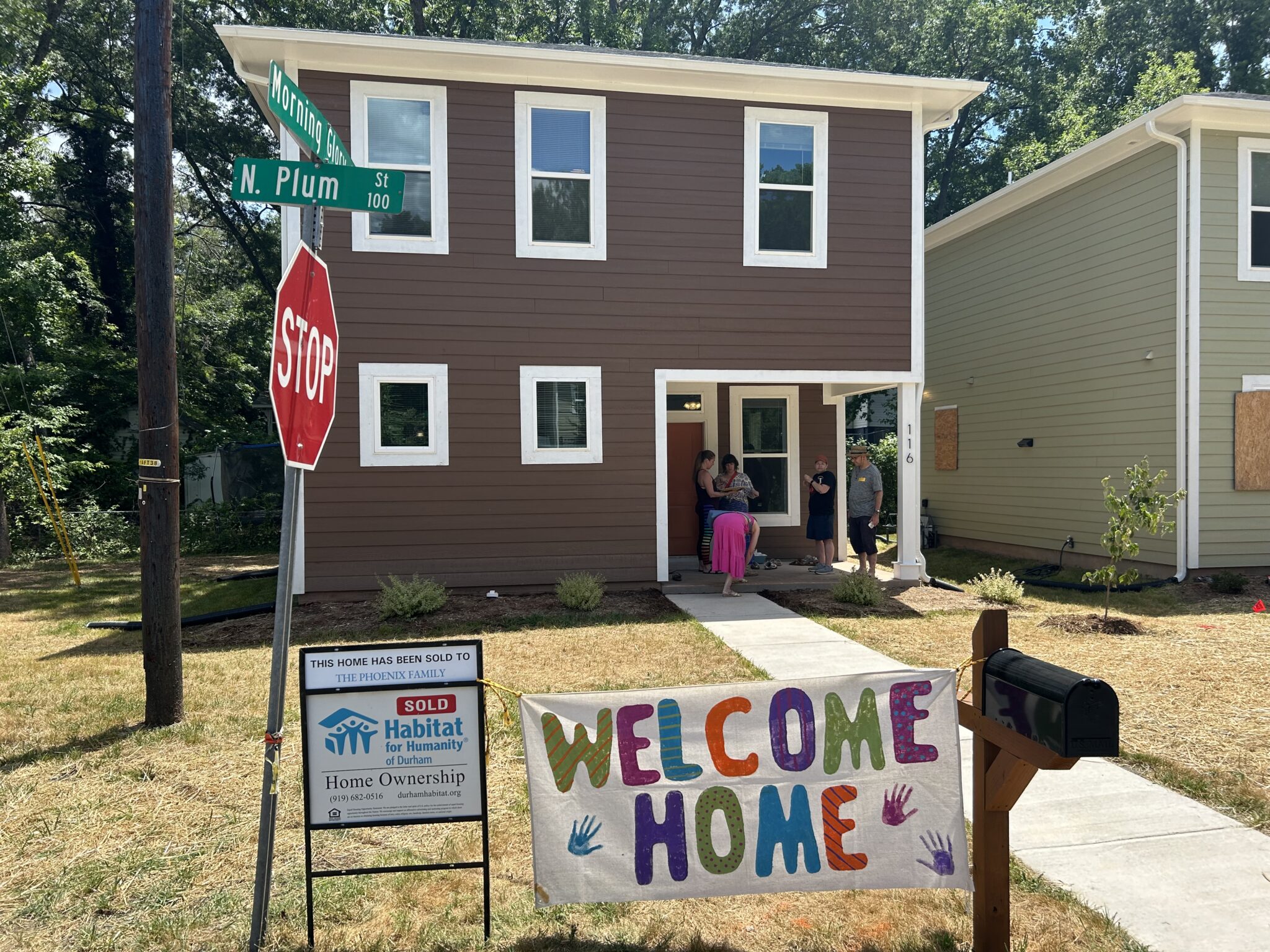






The North Carolina House Finance Committee has signed off on a bill to close a property tax loophole for affordable housing that is costing local governments tens of millions of dollars each year.
Read more Trump taps former career ICE official to lead agency
Closing the loophole would and $32.6 million by fiscal year 2030-31, according to estimates by the General Assembly’s Fiscal Research Division.
FRD, which provides lawmakers with nonpartisan fiscal expertise, shared the data this week as the committee considered House Bill 1042 to close the loophole.
H1042 would make it tougher for for-profits to partner with nonprofits to receive the tax benefits. It would require such partnerships to include government funding to ensure affordability.
If properties that are not financed with government support, the new proposal requires them to be 100% owned and operated by an eligible nonprofit that has owned and operated affordable rental housing for at least five years. The nonprofit may not lease the property to another entity or receive funding or financial assistance from a for-profit organization.
“The intent of this work is to preserve the low- to moderate-income or affordable housing exemption for long-term affordable housing, and ensure that there is a public benefit from providing this exemption,” said Rep. Erin Paré (R-Wake) at Tuesday’s meeting.
Current law gives generous property tax cuts to for-profit apartment complex owners that partner with qualifying nonprofits, as NC Newsline previously reported.
The scheme, described by critics as a “rent-a-nonprofit structure,” allows for-profit apartment complex owners to take advantage of the tax exemption by handing over a fraction of ownership to a willing nonprofit.
NC House committee wants to close costly tax loophole for affordable housing
The move is costing cities and counties tens of millions of dollars in property tax revenue, money that would otherwise go to fund schools, libraries, public safety and health and human services.
Read more US Senate approves Warsh, Trump’s pick to replace Powell as Fed chair
The total value of property exempted from local property taxes due to the affordable housing exclusion increased by an average of 14% every year from fiscal year 2015-16 to fiscal year 2022-2023, FRD reported, but then skyrocketed an average of 38% annually from fiscal year 2022-23 to fiscal year 2024-25.
Paré said Wake County has seen revenue losses due to the exemption jump from roughly $1.7 million in 2021 to $11.4 million in 2025.
“This troubling trajectory going forward is very problematic” Paré said. “That foregone revenue burden gets passed on to mostly other residential taxpayers.”
Under the current law, land being held for future development is eligible for a tax deferral for 10 years. Rep. Tim Longest (D-Wake) had questions about a provision in the bill that would reduce the tax deferral period to five years.
Longest said Habitat for Humanity has concerns about the provision because it and other nonprofit housing developers may have to hold land for long periods while preparing to develop it.
“We all know that the process of development can take longer than we would like,” Longest said.
The loophole was created in 2013 when the N.C. Court of Appeals ruled that Cane Creek Village, a low-income housing project in Mitchell County owned by a for-profit limited liability company but controlled by a nonprofit, was entitled to a property tax exemption under state law.
Northwestern Housing Enterprises, Inc., the nonprofit in that case, owned 0.1% of Blue Ridge Housing, which held the title to the property. A for-profit partnership, North Carolina Equity Fund III Limited Partnership, owned 99.9% of Blue Ridge Housing.
Read more NC Republican leaders announce end to state budget impasse
GET THE MORNING HEADLINES.