


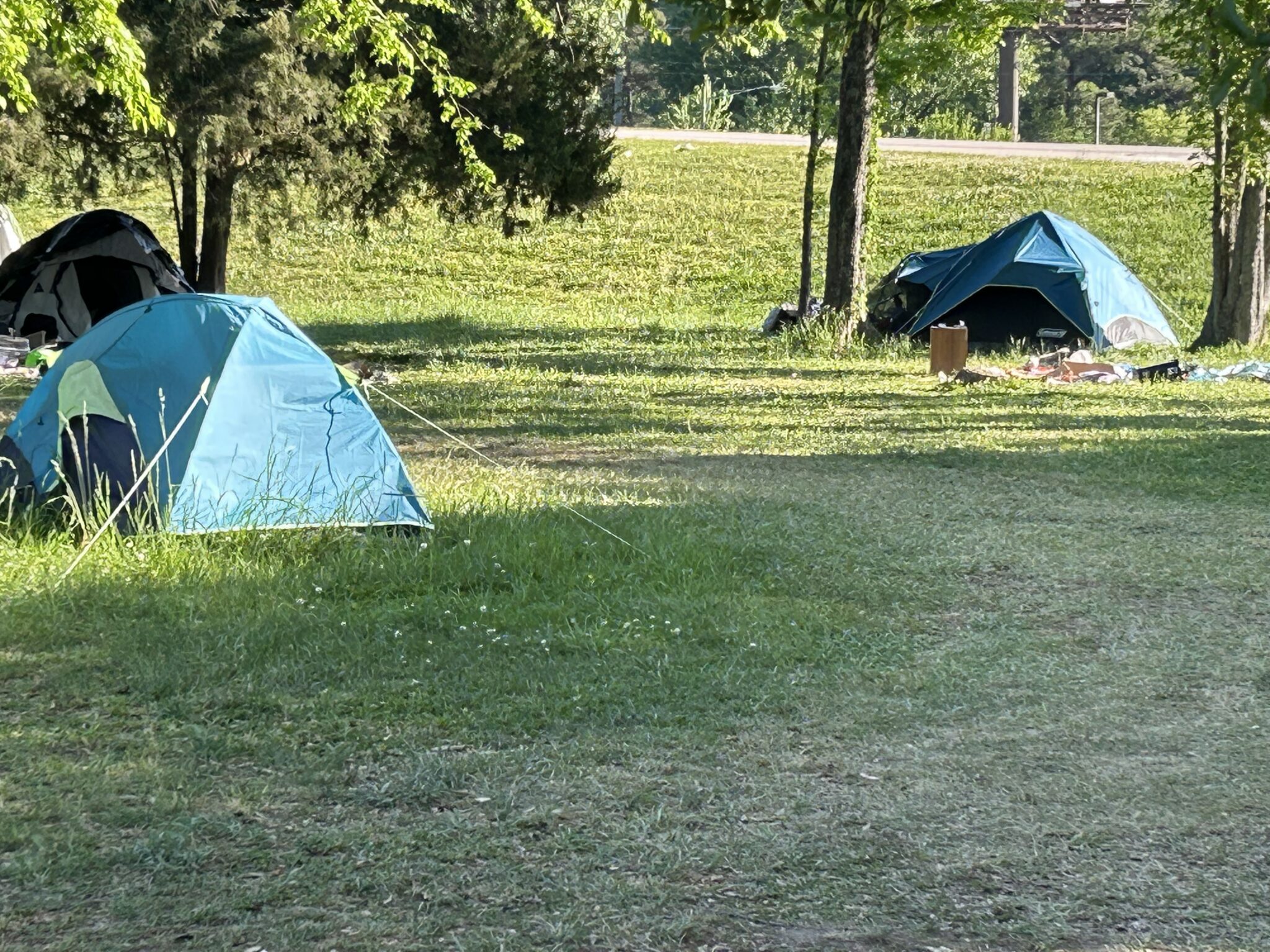
After a spirited debate Wednesday, the North Carolina Senate approved a bill that would require local governments to regulate and police homeless camps and make homeless shelters drug-free zones. Critics say it amounts to criminalizing homelessness.
Read more NC House Republicans override Gov. Stein’s vetoes on anti-DEI and pro-ICE bills
Sen. Brad Overcash (R-Gaston) said House Bill 437 is needed because North Carolina is experiencing a “public safety crisis” due to a “proliferation of homeless encampments.”
“It has harmed our economic vitality and our small businesses, and it has also harmed the dignity of our homeless citizens,” Overcash said.
But Sen. Mujtaba A. Mohammed (D-Mecklenburg) pushed back strongly, arguing that H437 would only hide a “tragic failure.”
“The message of this legislation seems to be, if we can move homeless people somewhere else, then the problem is gone,” Mohammed said.
Meanwhile, Overcash said H437 will ensure the state has “safe parks and public spaces once again.”
“This law will make it clear that our local governments shall not authorize, nor will they allow, homeless encampments in our public spaces, in our parks, not in the right of ways, not on our sidewalks, not on our public lands or on our public buildings,” Overcash said.
He said the provision in the bill making homeless shelters drug-free zones puts drug dealers on notice by increasing penalties for drug sales at homeless shelters.
“It puts drug dealers on the same par if they’re dealing drugs in a homeless shelter, just as they are if they’re dealing drugs in a school zone,” Overcash said.
An amendment by Sen. Lisa Grafstein (D-Wake) to raise the age for tobacco and vape purchases to the federal level, increase penalties for trafficking in opioids and heroin and appropriate $35 million for drug education was tabled.
“These are concrete things that we can do to actually help our towns and cities address the issues that are tangential to homelessness in many circumstances,” Grafstein argued.
H437 was approved on a 26-16 vote along party lines with all Republicans voting in favor. It will be sent to the state House for a final vote, along with an amendment by Overcash that more clearly defines which homeless facilities are covered under the bill and explains how citizens or business owners can file complaints about violations.
As NC Newsline previously reported, H437 would require municipalities to approve a location for homeless camps on municipal property for less than a year at a time, and only when indoor shelters don’t have enough space. Local governments would have to provide restroom facilities, water and public safety personnel. The measure doesn’t contain any money to help pay for the camps.
Critics said the version of H437 that came before lawmakers Wednesday was an improvement, but still needed work.
Read more Lunch with ‘mad as a murder hornet’ Trump and US Senate GOP fails to heal divisions
“I appreciate the intent of this bill to both improve public safety and enhance the dignity and respect of folks in our community who are unhoused. I just wish we were doing it a little bit differently,” said Sen. Julie Mayfield (D-Buncombe).
The most effective way to deal with the homeless crisis is with housing and wraparound services that address mental health, addiction and other concerns, Mayfield said.
“I wish that we were focusing a little bit more on that, and particularly that we were putting some funding toward efforts like that,” Mayfield said. “This bill doesn’t contain funding for any initiatives to help our homeless neighbors.”
North Carolina advocacy groups speak out against homeless ban bill
While North Carolina’s bill doesn’t technically criminalize people for being homeless, it opens up local governments for civil liability if they don’t evict homeless people sleeping anywhere but in shelters or approved campsites. Critics say that essentially forces local governments to push homeless people out of public spaces.
The bill has been widely condemned by advocates for people experiencing homelessness, including the N.C. Coalition to End Homelessness and the N.C. Housing Coalition.
The coalitions issued a joint statement last week contending that H437 would create financial, operational and legal hardships for communities that already struggle to meet housing and service needs for people experiencing homelessness.
Samuel Gunter, executive director of the N.C. Housing Coalition, addressed the bill this week during the organization’s weekly housing call.
“This is a dangerous bill that is targeting the most vulnerable North Carolinians,” Gunter said. “Rather than focusing our energy and resources on solutions to unsheltered homelessness, this bill criminalizes the crisis and adds more legal and financial pressures to local communities and governments.”
‘Truth in Taxation’ passes Senate
The senate also approved, dubbed “Truth in Taxation,” requiring local governments to pass a resolution or ordinance to allow the tax rate to exceed the revenue-neutral rate when they’re going through a property tax revaluation. The bill also requires them to publish public notices of intent to exceed the revenue-neutral rate and to hold a public hearing about it.
“A lot of people don’t realize what their taxes are because it’s figured into their mortgage payment,” said Sen. Carl Ford (R-Rowan). “We want to make sure everybody understands.”
Counties and municipalities that do not comply with S992 would have to refund any property taxes collected that exceed the revenue-neutral tax rate.
To avoid raising property owners’ tax bills after a tax reappraisal, local governments can lower their overall property tax rate to offset the increase in values, so they’re collecting the same amount of revenue.
That’s what’s known as a revenue-neutral rate.
Bill supporters say local governments aren’t fully offsetting the revaluation. They say local governments claim they’re lowering the property tax rate, but the real tax bill that a property owner pays still goes up.
Read more Community leaders sound alarm over environmental justice as data centers boom across NC
S992 will be sent to the House.