



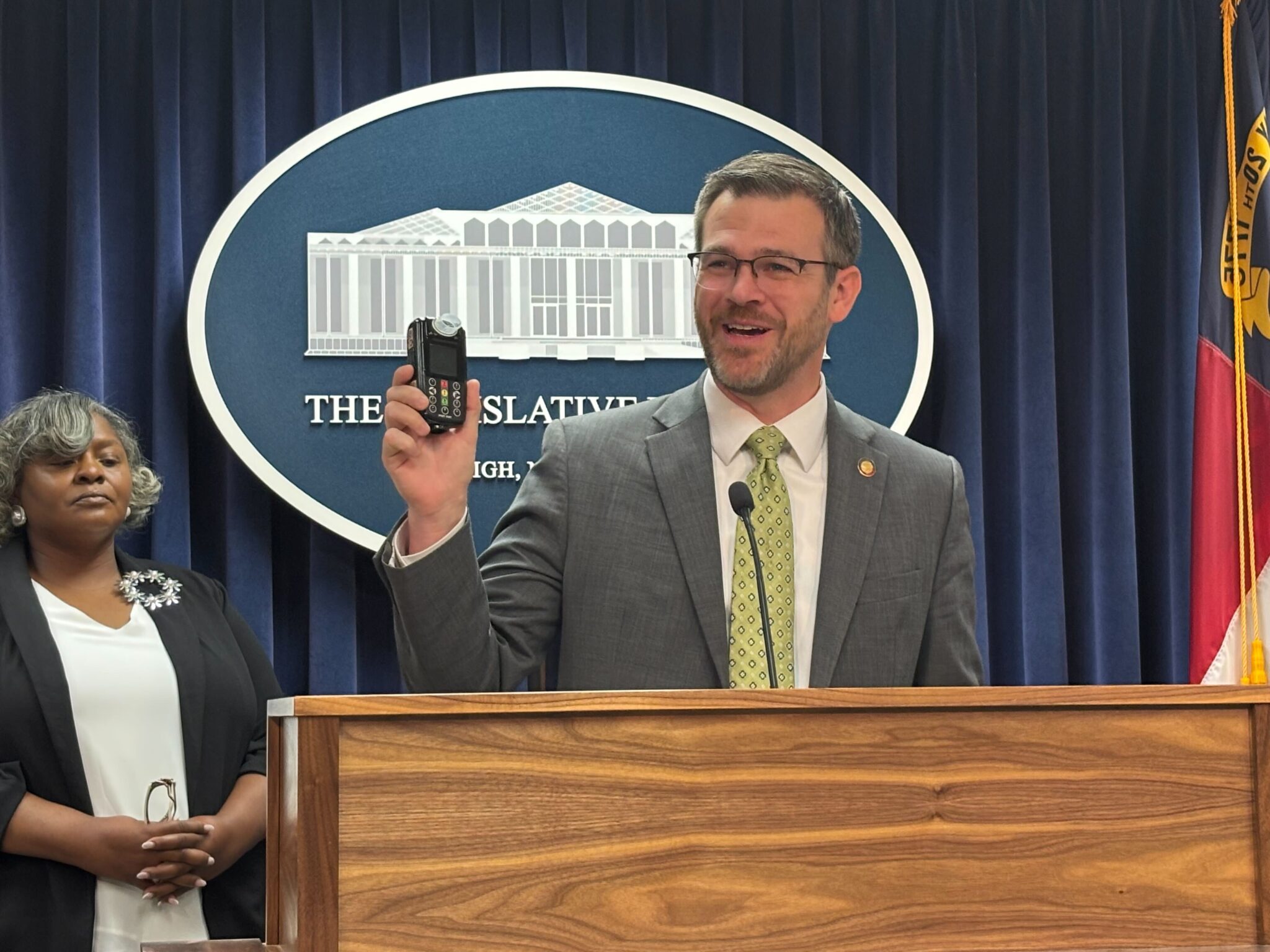
A new bill in the North Carolina House of Representatives would expand the number of drivers required to install a breathalyzer lock device on their vehicle after being convicted of driving while impaired.
Read more NC musicians, concert venues join lawmakers in push to ban reseller bots, ticket fraud
An ignition interlock device works by requiring a driver to breathe into it before turning on the engine of their vehicle, so it can measure their blood alcohol content before allowing them to drive. According to the CDC, the devices reduce repeat offenses by roughly 70%.
Under current law, only repeat offenders and drivers who were highly intoxicated at the time of arrest are required to install the device. House Bill 1199, also known as the SEATBELT Act, would extend the requirement to anyone convicted of driving while impaired, even first-time offenders.
H1199 would require anyone convicted of driving while impaired to install ignition interlock devices on any vehicles they own or operate for one year. Offenders would also be able to regain limited driving privileges early under certain conditions if they install a breathalyzer.
Looser liquor law proposed by NC lawmakers faces moral, fiscal objections
The devices cost around $3 a day, bill sponsor Rep. Mike Schietzelt (R-Wake) said at a press conference Wednesday, with installation costing between $100 and $150. Drivers who cannot afford the device can apply for a fee waiver if they make below 150% of the federal poverty line or receive public assistance funds.
“The economic benefits far outweigh that. If you have one of these installed in your car, rather than having a suspended license and no way to get to work, you can at least continue to work,” he said.
“This bill is about trying to do something that actually works,” Schietzelt said. “Rather than throw somebody in jail, rather than suspend somebody’s license — which is a mechanism that has shown it does not stop people from driving — we have the technology now to tailor it to the offense, to change the behaviors, and to make North Carolina’s streets safer.”
Over a period of 12 years, Schietzelt said, the devices have prevented more than 3 million attempts to drive drunk across the U.S., according to data from Mothers Against Drunk Driving. “How many times did that prevent a serious wreck? How many times did that prevent a death or a life-changing injury?” he asked.
Read more Risk low of hantavirus spread, CDC officials say
Primary sponsors on the bill are Schietzelt, Rep. Allen Chesser (R-Nash), Rep. Timothy Reeder (R-Pitt), and Rep. Erin Paré (R-Wake). The bill has garnered some initial bipartisan support as well, with three Democrats joining on as sponsors.
Reeder, a practicing emergency physician, said he all too often witnesses “the human tragedy that’s caused by drunk driving.”
“If we can make somebody use the technology to prevent themselves from making a bad decision, that makes perfect sense to me,” Reeder said. “We should no longer rely on just a punishment, but using the available tools to prevent someone from getting behind the wheel of a car who’s drunk.”
H1199 would also require drivers convicted of some speeding offenses to equip their vehicles with an “intelligent speed assistance” system, which monitors and limits vehicle speed using GPS tracking, a provision of the bill that Schietzelt discussed at a press conference earlier this month.
Speaking alongside Schietzelt on Wednesday were North Carolinians whose lives were changed irrevocably by impaired drivers, as well as public safety officials and advocates.
Stephanie Ronan, a mother of two, said she suffered a near-fatal neck injury as well as a brain injury after a collision in 2018 with an impaired motorist who was driving with a suspended license. She could no longer continue her work as an optical technician even after her recovery.
“When I woke up in the hospital, there were times I struggled to remember details of my own children. No parent should ever have to experience that,” Ronan said. “After the crash, I became the patient instead of helping others. That change is something I still carry with me every day.”
Read more Bill to close property tax loophole advances in NC House committee